From Recognition to Action: delivering for children in the second national action plan
From Recognition to Action distils what more than 200 stakeholders told us needs to change in domestic and family violence – and the 20 actions that would make children and young people safer.
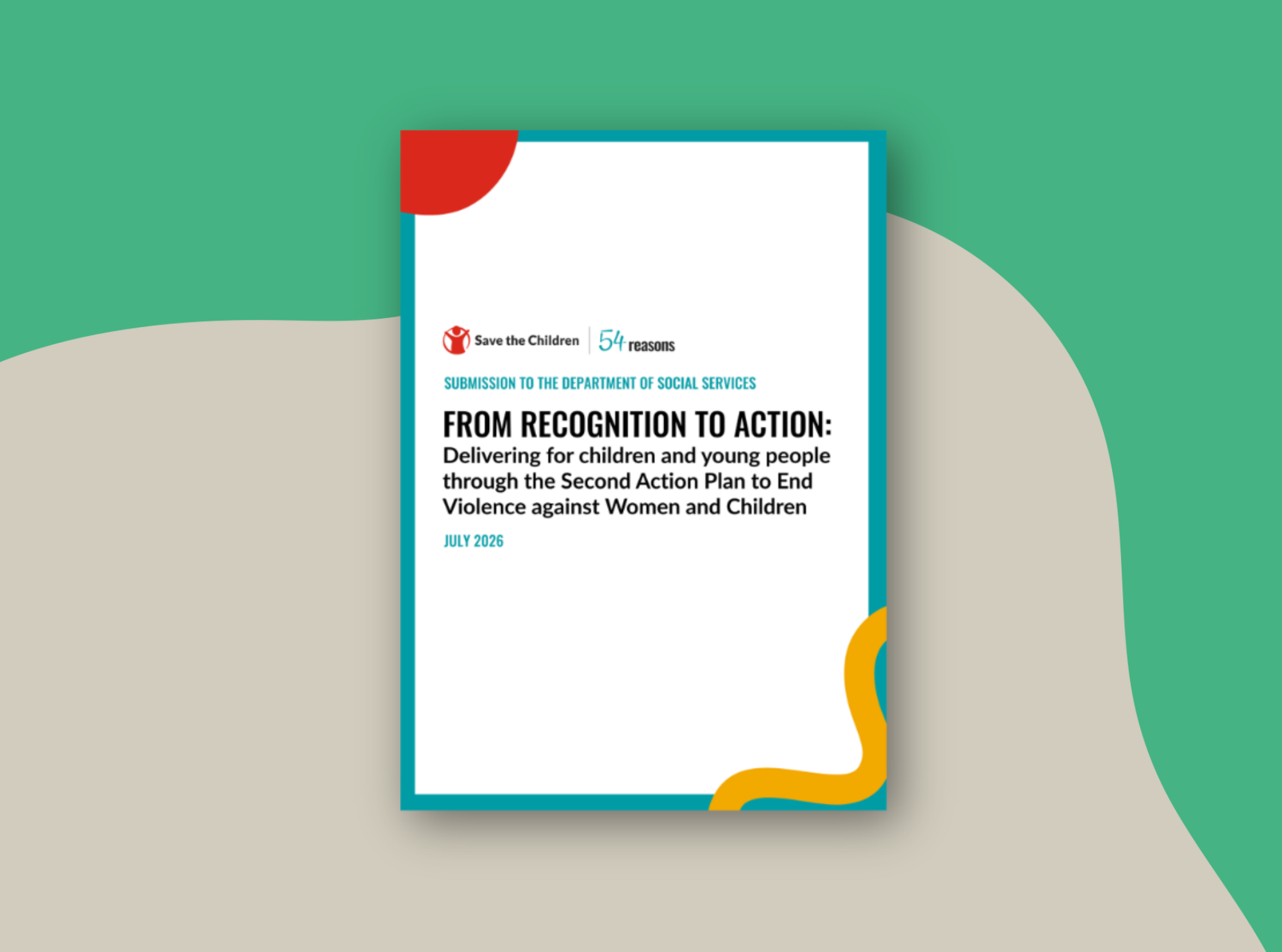
Australia's National Plan to End Violence against Women and Children recognises, for the first time, that children are victim-survivors in their own right – not simply witnesses to harm in the home. But recognition has outpaced action. As governments develop the Second Action Plan (2027–2032), this submission sets out how to close that gap.
Commissioned by 54 reasons and co-authored by Kate Fitz-Gibbon and Matt Tyler, From Recognition to Action is a practical resource for anyone working in policy, advocacy, primary prevention, service delivery or government – including Children's Commissioners, family and domestic violence practitioners, and advisors shaping the next Action Plan. In it, you'll find:
- The case for treating children and young people as victim-survivors in their own right, and why a system built around adults too often leaves them unseen
- What children and young people told us helps them feel safe: trusted relationships, stability, and being believed when they ask for help
- 20 recommendations across six priorities – from preventing violence through to supporting recovery – that federal, state and territory governments can act on now
- A synthesis of the evidence and expertise of more than 200 stakeholders, including Children's Commissioners, researchers, practitioners and young people with lived experience
- Practical, achievable actions, many of which echo decades of existing evidence about what children need
The recommendations reflect a striking level of agreement about what must change – and what children and young people need to be safe, and to recover and heal.
The submission's 20 recommendations fall under six priorities:
- Prevent violence against children before it occurs
- Intervene earlier, and remove the barriers to help-seeking
- Ensure every child victim-survivor can access specialist support
- Provide long-term support for recovery and healing
- Create clear national leadership and accountability for children's safety
- Put children's rights and voices at the centre of decision-making
Grounded in what we heard, and what we know
These recommendations didn't come from us alone. They were shaped through consultation with more than 200 stakeholders – Children's Commissioners, practitioners, researchers, and young people with lived experience – and synthesised into a shared view of what needs to change. Many echo evidence that has been clear for decades. What's needed now is the will to act.