The 54 rights

54 reasons to champion child rights

No matter where they’re from, how they live, or who takes care of them, every child has the same fundamental rights to develop, grow and live well. 

The UN Convention on the Rights of the Child

Our name comes from the 54 articles of the United Nations Convention on the Rights of the Child (UNCRC).

Every child around the world has their own set of rights, recognised by countries across the globe. And it all started with one determined woman. Eglantyne Jebb, founder of Save the Children.

In 1919, Eglantyne wrote the first Declaration of the Rights of the Child, making the case that every child has rights to food, healthcare, education and protection from harm.

Her idea was so powerful that it was adopted internationally in 1924. Over decades, people worked together to make it even stronger and fairer – and in 1989, it became the UN Convention on the Rights of the Child.

The UNCRC is made up of 54 articles – 54 promises to children everywhere. It sits alongside other big agreements like the Universal Declaration of Human Rights and the UN Declaration on the Rights of Indigenous Peoples, all working together to protect our shared and unique rights.

Australia has signed the UNCRC. This means we have a national responsibility to respect children’s rights, meet their basic needs, and support them to reach their full potential.

These aren't just words on paper. They're a promise.
Why do children need special rights?

Everybody has the same human rights – a set of protections and guarantees people can expect from their government no matter where they live. So why do kids need their own set of special rights? Here are just a few reasons why:
Icon of an arrow pointing up

Evolving capacities

Children are constantly growing, learning, and discovering who they are. Rights that recognise this mean kids get the right support at every stage of their development – so they can tackle challenges, chase dreams, and fully thrive.

Icon of an eye with a checkmark

The right to be heard

Children's voices are too often left out of decisions that affect their lives. Special rights change that – making sure children and young people's ideas and perspectives are taken seriously by the adults around them.

Icon of a telescope

Looking to the future

The decisions made today will shape the world children grow up in. That's why young people deserve a say – so their needs are front and centre when it comes to the long-term policies and systems that will define their future.
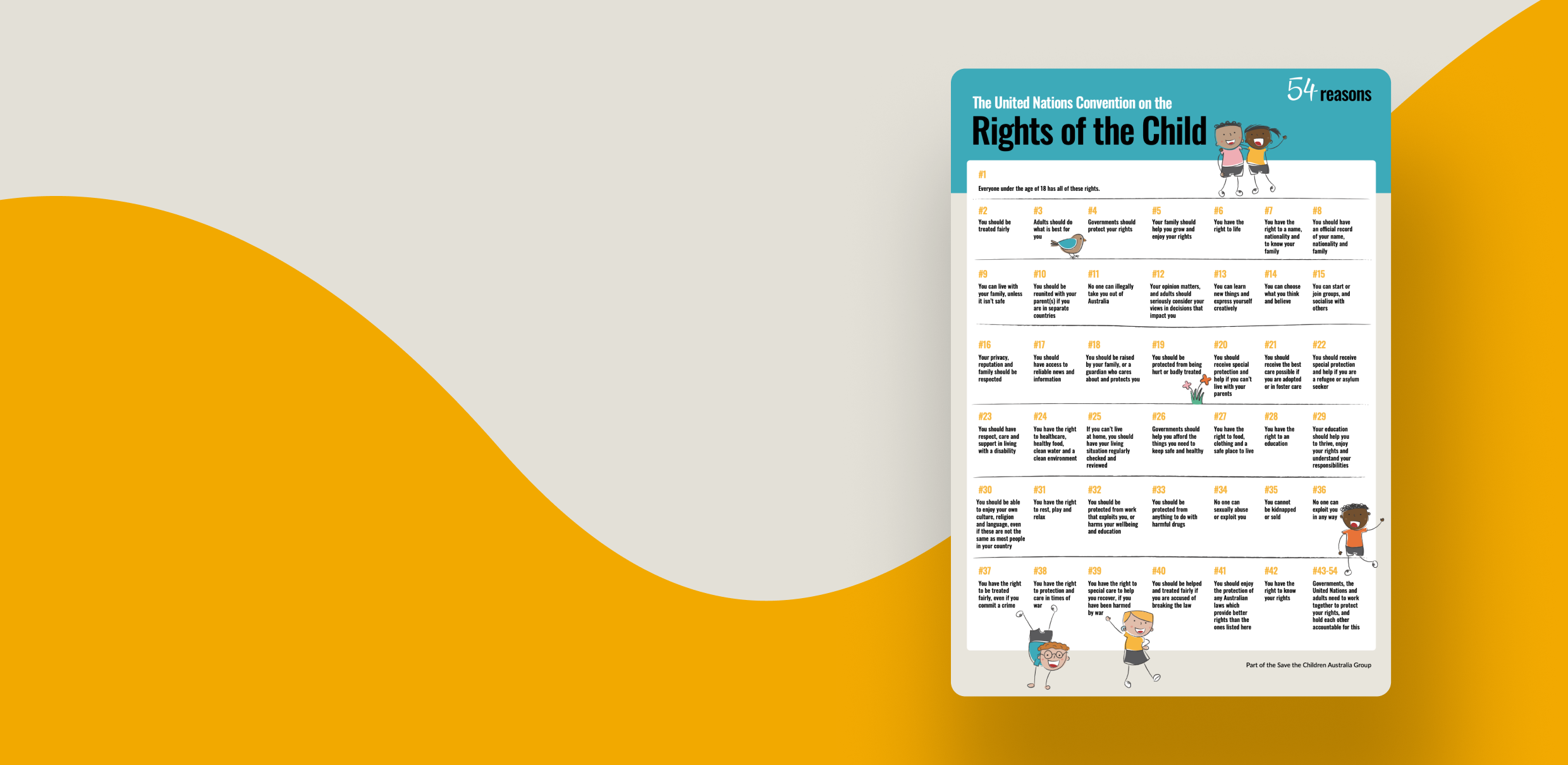

The 54 articles of the UNCRC

To read the full text of the UN Convention on the Rights of the Child, head to the UN Human Rights Commission website.
See more
1
Article 1
The UN Convention on the Rights of the Child applies to every person under the age of 18. No exceptions, no conditions.
2
Article 2
All children have the same rights under the UNCRC, no matter their race, religion, abilities, what they think or say, where they live, or how they live.
3
Article 3
Whenever adults make decisions that affect children, the best interests of those children must be the focus.
4
Article 4
Governments are responsible for making children's rights real. They must take practical steps through laws, policies, budgets and services to ensure every child can live out the rights.
5
Article 5
Parents, caregivers and famllies should help children understand and enjoy their rights as they grow up.
6
Article 6
Every child has the fundamental right to life, and governments must do everything possible to ensure children don't just survive, but thrive.
7
Article 7
Every child has the right to a name, nationality and, where possible, to know and be cared for by their family.
8
Article 8
A child's identity – their name, nationality and family connections – must be recognised and protected by law.
9
Article 9
Children can live with their family, unless it isn’t safe. If they don’t live with their family, they have a right to have contact with them, if it’s safe.
10
Article 10
Families who live in different countries should be allowed to move between those countries so that parents and children can stay together, or be in contact.

You might also be interested in

Resources

From frontline tools to framing research, we've got resources that can help you make child rights real at work, in community or at home.

Learn more

Our story

54 reasons is proudly part of Save the Children Australia, delivering services and driving systems change across the country.

Learn more

Get Involved

Want to help make child rights real? There are lots of ways to get involved, from joining the team to partnering through your business.

Learn more