Reframing Child Rights: research memo
We partnered with the FrameWorks Institute and the Queensland Family and Child Commission to take a close look at how child rights are framed in Australia today—and how we can do better.
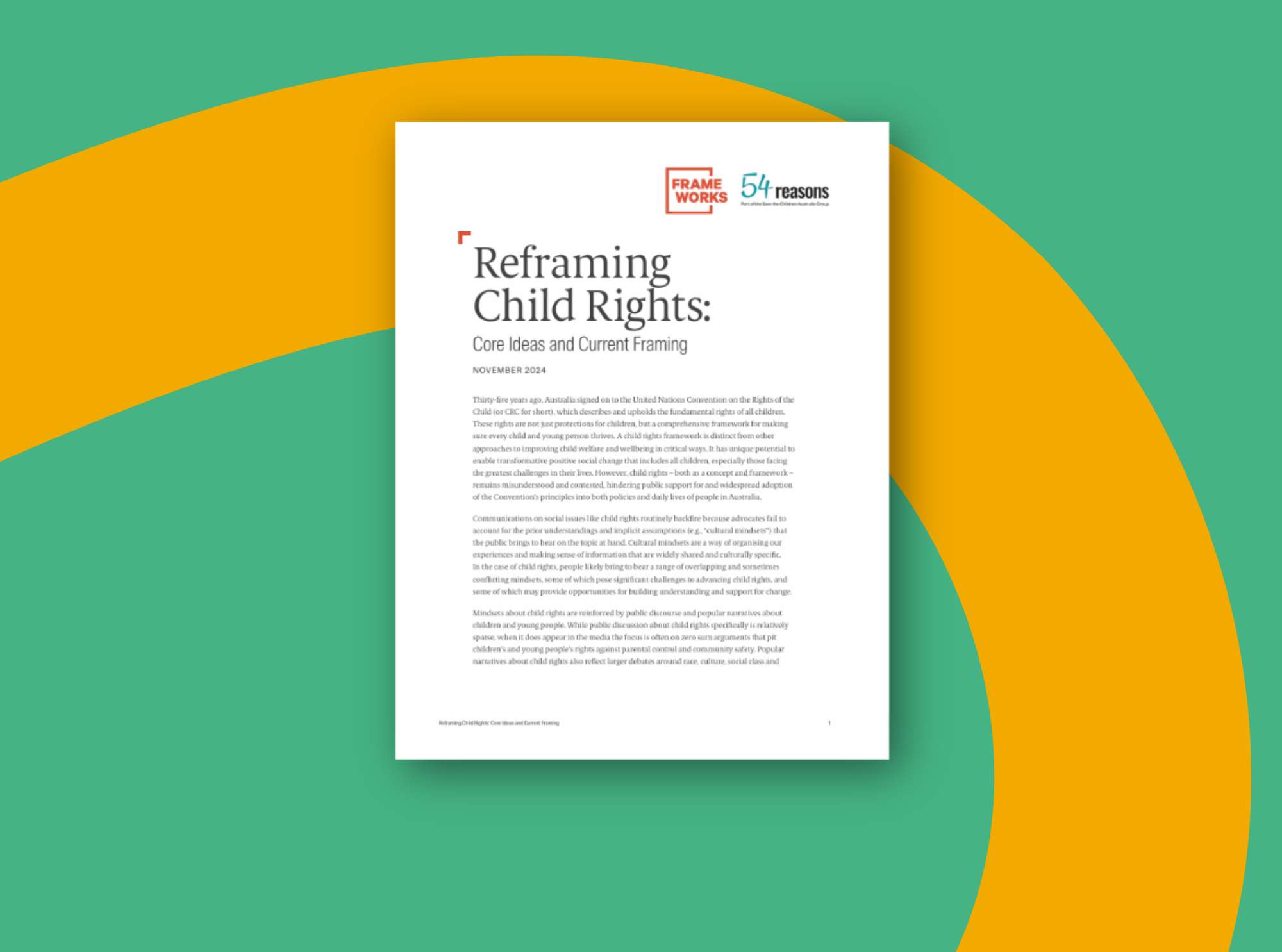
This memo – phase one in a long-term research project – is designed to be a useful resource for anyone working in advocacy, policy, communications or leadership roles connected to children and families. In it, you’ll find:
- 8 core ideas that advocates and experts agree are essential to communicate about child rights
- A plain-language look at how child rights are being framed today—by organisations, advocates,
- and the media
- Insights into what’s helping, what’s hurting, and what’s missing in current public conversation
- Emerging recommendations for what to say (and what to avoid) when communicating about children’s
- rights in Australia
- A preview of what’s next: further research to test public mindsets and build a framing strategy that works
It’s a useful foundation for anyone who wants to communicate more clearly, more effectively, and more confidently about children’s rights - whether you're crafting policy, writing media content, talking to decision-makers, or working alongside children and families every day.
How was it developed?
Reframing Child Rights brings together three strands of research, carried out across 2023-2024:
- Expert interviews and listening sessions. We spoke with 12 Australian experts in child rights—researchers, advocates, and practitioners—to identify shared principles and messages they see as essential.
- Sector scan. We analysed the public-facing communications of 25 organisations across Australia to understand how child rights are currently framed in the sector.
- Media analysis. We reviewed Australian news stories from 2022–23 to explore how child rights show up (or don’t) in public conversation—especially in coverage of youth justice, education, and family issues.
What's next?
This is the first phase in a multi-stage reframing project. Next, we’ll be working to understand the cultural mindsets Australians bring to child rights—and to test new, evidence-informed ways to frame them that build understanding and support.
We’re actively seeking funding and collaborators to continue this work.
To learn more, or get involved, please email info@54reasons.org.au.