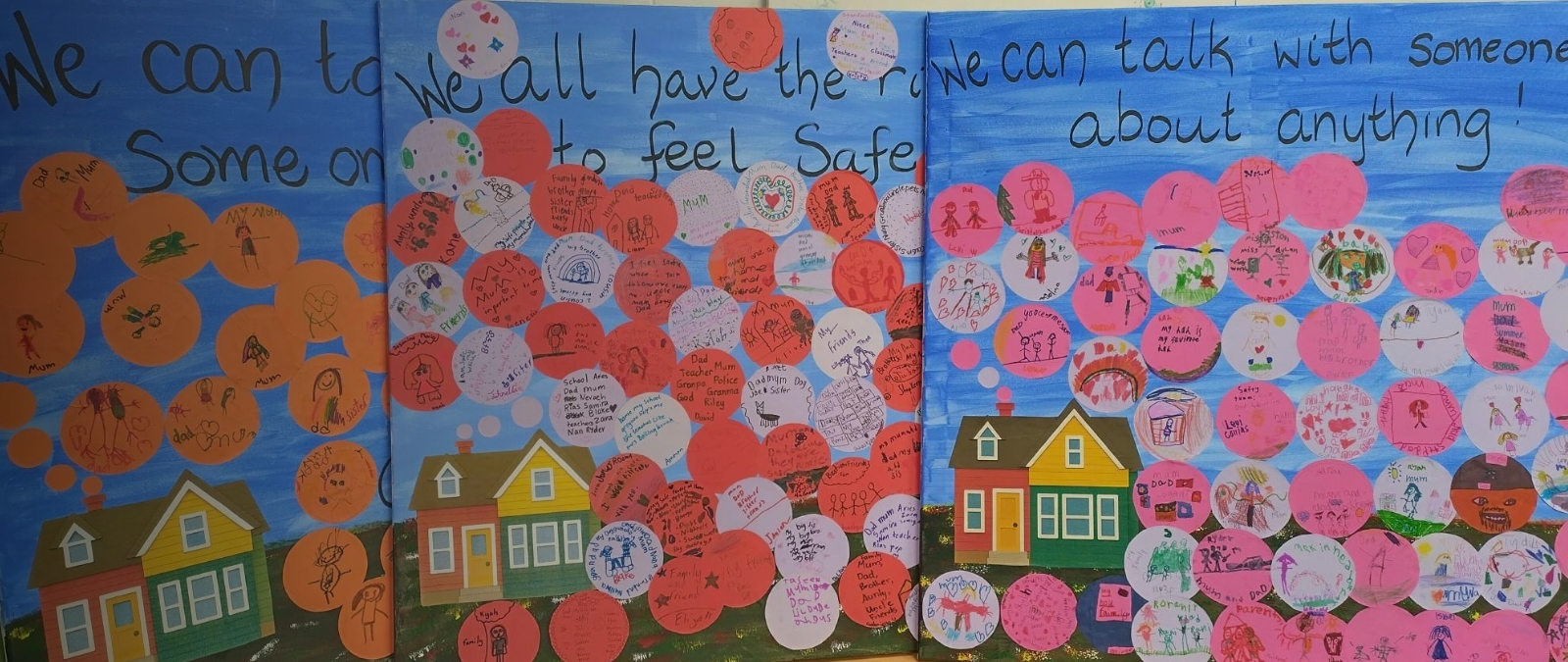
Ask children who have lived through violence what they need, and the answer is strikingly practical: adults who notice when something's wrong, who believe them, and who follow through with help. None of that should be too much to ask. Australia can deliver it. Right now, our systems aren't doing it consistently – but children are telling us exactly how to change that.
In 2022, the National Plan to End Violence against Women and Children recognised children and young people as victim-survivors in their own right for the first time. That shift mattered. It acknowledged that children don't just witness violence from the sidelines – they live it directly. And they have their own needs and rights, and their own paths to safety and healing.
Four years on, that recognition still matters. But recognition on its own doesn't make children and young people safer. There’s a significant gap between saying children matter and actually responding to them in ways that improve their safety and wellbeing.
The scale of the problem makes the case for action on its own. Nearly two in five Australian children grow up in a household affected by domestic and family violence. The 2023 Australian Child Maltreatment Study found that child maltreatment in this country is "endemic". These aren't distant statistics. They represent children in every community, in every state and territory – many of whom are struggling to find the help they need.
“I believe we have a whole lot of young people out there, like me, who are facing challenges, but they don't really know where to seek help. So, I feel a whole lot could be done.” -- Scott, 18
That's why we commissioned From Recognition to Action. You can read it here.
Putting children at the centre of the Second Action Plan
The Australian Government is currently developing the second Action Plan under the National Plan – the commitments that will shape how governments respond to domestic, family and sexual violence over the next five years.
If the National Plan's goal is to end violence against women and children in one generation, children and young people are our best chance of getting there. We can't let the opportunity of the next Action Plan pass without their voices and needs at the centre of it. They’re the experts in their own lives – in what will help them live safer, healthier and happier lives.
So, we asked leading experts Kate Fitz-Gibbon and Matt Tyler to find out what governments could do right now to better prevent and respond to violence and abuse experienced by children and young people.
Driving a national consultation
From Recognition to Action is grounded in a national consultation carried out in July 2026. It brought together more than 200 people from across Australia – youth advocates, Children's Commissioners, academics, frontline practitioners, policy experts, and sector leaders – through interviews, focus groups and an online survey.
Importantly, the work didn't start from a blank page. It built on a rapid review of previous inquiries, Royal Commissions, coronial inquests and death review processes, deliberately looking for areas of longstanding agreement, recommendations that have been made before and still haven't been delivered, and practical opportunities for reform.
It also kept children's own voices at the centre. Alongside focus groups with youth advocates, the consultation drew on the testimony children and young people had already shared through research.
What came through from young people was remarkably consistent. While adults tend to focus on systems, structures and reform, children and young people get straight to the point. They told us they want trusted adults who notice when something is wrong, who believe them, who know how to have difficult conversations, and who follow through on what they promise. They want services that are easy to find, simple to access, and designed around them rather than adults. They want the barriers removed, and they want a say in the decisions that affect their lives. None of that should be too much to ask.
"I didn't quite realise how important it would be for me to even just hear someone say, ‘I believe you,’… It feels like a weight has kind of been lifted." -- Dylan
What we found
The central finding is confronting, and it's also hopeful: Australia doesn't have an evidence gap. We know what children need. We know what works. What's missing is the doing.
Too many services are still designed mainly for adults, with responses to children ‘bolted on’ rather than built for them. Children continue to face long waiting lists, restrictive eligibility rules and significant barriers to specialist support. Some organisations reported wait times of up to six months for specialist therapeutic services, waiting lists of up to 200 children, and – in the worst cases – being forced to turn children away because they simply didn't have the capacity to help.
"The message coming out of this report is significant because of its consistency," said 54 reasons Executive Director Vicki Mau. "We have the evidence and we know what works. What Australia isn't doing well enough is implementing these findings to better protect children."
20 recommendations, shaped by 200 voices
The submission sets out 20 things governments could do now, across six areas:
- Stop violence before it happens, including Australia's first national framework for preventing violence against children.
- Make it easier to get help early by reviewing the laws and barriers that currently make it harder for young people to reach out.
- Provide specialist services designed for children in every state and territory, properly funded to match the scale of need.
- Support recovery and healing for as long as it takes, because healing from trauma is long-term and rarely linear.
- Make sure someone is responsible for change, including re-establishing a Federal Minister for Children.
- Make children's rights real by embedding children's rights, and children's voices, into the laws and decisions that affect them.
As co-author Kate Fitz-Gibbon put it, this is "an opportunity for federal, state and territory governments to move from recognition to action – preventing violence before it occurs, intervening earlier, building specialist child-centred responses and supporting children's long-term recovery and healing. From Recognition to Action shows how that can be done now."
Co-author Matt Tyler was equally direct: "Children and young people have told us what they need, and we have decades of research and inquiries with recommendations that remain unactioned… What is needed is the political will to act."
What happens next
We've shared these findings with the Australian Government to inform the Second Action Plan, and we'll keep working alongside partners, advocates and young people – in the media and wherever decisions get made – to push for change.
We've also done something we think matters just as much: we've reported back to children and young people directly. Alongside the full report, we've published a youth-friendly summary, written for the people this work is ultimately about – because being accountable to children means telling them what we heard, in language they can understand, and being honest about what we do next.
This is especially important, because children and young people aren't only survivors of violence. They’re an important part of ending it. Every time they look out for a friend, support someone they care about, get help for themselves, or speak up about what needs to change, they're part of the solution. Adults are the ones who usually get to make the big decisions – so it's on us to share that power, to make room for young people, and to keep them safe while we do.
“You can get failed by your mum and dad, and you can get failed by systems … We need the government and people just to realise … they can do this … most kids don’t get heard and listened to.” -- Ivy
Australia has the evidence. We have the solutions. What we need now is the will to act — for every child's right to be safe, to be heard, to get help when they need it, and to have every chance to thrive.
If you're experiencing violence or abuse, or you're worried about something happening to you, you don't have to face it alone. You can talk to a trusted adult or contact Kids Helpline for free, confidential support on 1800 55 1800 or via webchat at kidshelpline.com.au.
Listen now
.png)