Adults have a special responsibility to uphold children and young people’s right to be free from discrimination. We can do this by creating spaces where diversity is valued and their experiences are taken seriously.
To help us make this right real, 54 reasons' Young Advisors have shared five practical tips for adults who work with or support children and young people. As one Young Advisor put it: “If every company or organisation was a safe place for children and young people to grow, express and reflect on their experiences, it will lead to a better future.”
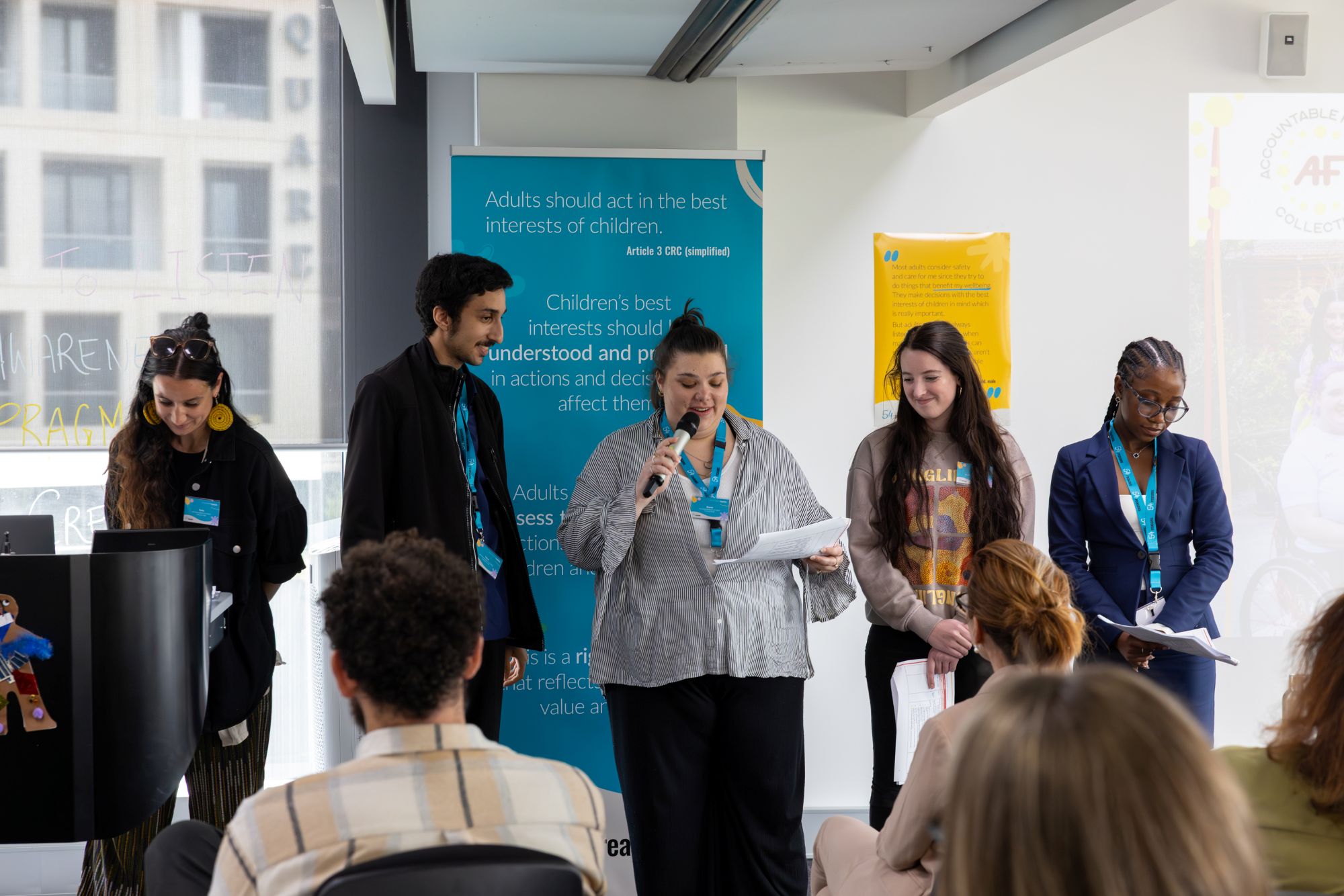
Here are Ash, Araiz, Ariba, Chloe and Jas, five of our Young Advisors, to break down the five tips:
Tip 1: Educate adults, children and young people on what it means to be treated fairly
- Understand what discrimination is and isn’t.
- Educate yourself, children, young people and other adults on discrimination and creating a culture of fairness and respect.
- Make sure you’re demonstrating this and living by example.
This means learning the basics of discrimination and children’s rights, talking openly with children, young people and other adults about fairness and respect, learning about the different ways children can be treated unfairly because of their identity, background, disability, family or beliefs. And it means leading by example in everyday decisions, language and behaviour. When adults model fairness, children see what respect actually looks like.
“Children look up to the adults around them and copy a lot of what they do. By exemplifying kindness and fairness, children are more likely to follow.” – 54 reasons Young Advisor
Tip 2: Make sure there is effective supervision
Don’t assume discrimination isn’t happening because you don’t see it or no one is speaking up.
Be curious about what children and young people and other adults are doing and saying.
Just because you don’t hear or see discrimination doesn’t mean it isn’t there. It’s important to be present and curious, check in with children and young people, notice who is being left out, talked over, teased or treated differently – and ask gentle questions. It’s adults’ responsibility to notice patterns of unfairness and step in early.
“We need ways to ways to raise concerns because if we don’t talk about our experiences of inequality, the constant discrimination will continue.” – 54 reasons Young Advisor
Tip 3: Make sure there are lots of ways for a child or young person to share if they’re discriminated against, or witness discrimination
These should include ways that are:
- Anonymous
- In person
- Onsite (like a feedback box)
- Online (and easily accessible by children and young people)
- By phone
It’s important to make sure there are multiple ways for young people to let you know when something isn’t right – especially concerning sensitive topics like discrimination. Whether they are the ones being targeted or they’ve seen it happen to someone else, ensuring there is an accessible avenue for them to communicate with you is vital.
“By creating easily accessible ways for children and young people to raise concerns and complaints it empowers them”. – 54 reasons Young Advisor
Tip 4: Take it seriously when someone shares what they’ve experienced or witnessed
- Be comforting and calm
- Document it
- Listen with an open mind
- Listen before answering
- Be patient
If a child or young person finds the courage to share something they’ve experienced or witnessed, how adults respond really matters. Young people want you to stay calm and listen closely before you responding, take detailed notes, and be patient with them because it can be hard to talk about. Even simple things like body language, tone of voice and not rushing the conversation can help children trust you, and feel believed and supported.
Tip 5: Take action
- Be unbiased
- Deal with it in a timely fashion
- Keep people who disclose in the loop
- Demonstrate accountability to children and young people
Young people are clear that adults must act on what they hear. That means responding in a timely and fair way without any biases, keeping the young person updated on the status of their report, and showing them that their concerns have been taken seriously.
“By stopping discrimination when [you] see it [you will] make the person who is being treated unfairly feel recognised and supported.” – 54 reasons Young Advisor
Discrimination should not be part of growing up. When adults listen, act and stay accountable, they help create spaces where every child feels safe, respected and able to be themselves.
These tips from 54 reasons Young Advisors are an invitation to all of us: use your power to make things fairer for the children and young people in your world. You can read and download the tip sheet via the button below.
Listen now